

Redefining Accessible Bathrooms: Design, Demand and User Experience
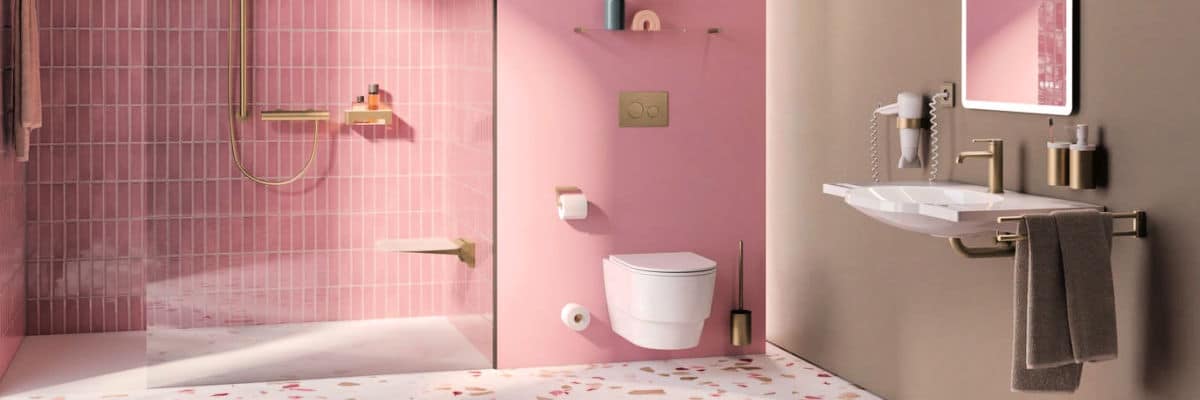
For decades, accessible bathrooms have carried an unfortunate reputation: clinical, unattractive, and designed purely for compliance rather than comfort or dignity. The typical “Doc M look”—white ceramic, blue plastic rails, and a distinctly institutional feel—sits awkwardly within the aesthetic ambitions of today’s hotels, care homes and public buildings.
But accessible design has moved on. And our expectations should move with it.
Thoughtful, person-centred design now recognises that accessibility isn’t an add-on or a concession. It can be intuitive, elegant and fully aligned with the wider design language of a project. The challenge is no longer simply meeting regulations; it’s creating spaces that genuinely support a diverse range of users—without compromising experience for anyone else.
Why Accessible Rooms Are Still an Untapped Commercial Opportunity
A recurring comment, particularly from hoteliers, is that they “don’t get demand” for accessible rooms. As a result, investment is often deprioritised in favour of areas perceived to deliver faster returns.
Yet the reality is far more nuanced.
Accessible rooms are used; they just aren’t used to their full potential. In many cases, guests aren’t aware of the features available, or the spaces feel overly clinical or cluttered with equipment they don’t need.
There is strong evidence that adaptable, flexible approaches can change this dynamic entirely
- Disabled guests have diverse needs. A room dominated by fixed grab rails or medical-looking fixtures can feel patronising when only partial support is required.
- Well-designed accessible rooms attract everyone. Their generous proportions and usability often make them a premium choice for able-bodied guests.
- Front-of-house teams become more confident. When accessibility features can be adapted or removed depending on who is checking in, staff are better able to support guests without awkward assumptions.
- Positive experiences build loyalty. When disabled travellers feel genuinely welcomed and accommodated, they return—and often bring family, partners or carers, increasing occupancy across multiple rooms.
When inclusivity becomes part of the residents’ experience rather than a regulatory obligation, it becomes a commercial asset, not a cost.
Care Homes & Later Living: Designing to Prevent Rather Than React
A parallel challenge appears in care homes and later-living developments. Many residents don’t ask for support until after a fall or injury. Maintenance teams frequently describe rushed retrofits—often drilling into tiled walls without clarity on what sits behind them.

This creates three common issues:
- Unnecessary cost caused by repairs or tile replacement.
- Compromised safety when products are installed without understanding load-bearing structures.
- Diluted design quality when essential additions clash with the original interior scheme.
Proactive planning—and selecting solutions that feel integrated rather than imposed—helps providers avoid expensive retrofits and support residents earlier, reducing risk and encouraging independence.
The Rise of Dual-Purpose Design
One of the most notable shifts across commercial sectors is the growing demand for dual-purpose products—solutions that offer support discreetly, without signalling themselves as traditional accessibility equipment.
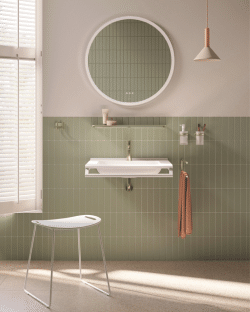
For example, supportive basins with subtle integrated hand grips are increasingly preferred. To the casual eye, the grips appear as elegant design details, often used simply to hold a towel. In practice, they provide:
- discreet, sturdy load-bearing support
- improved ergonomics for wheelchair users due to shallower basins
- increased surface space for toiletries—addressing a frequent complaint in accessible vanity areas
Many people feel more comfortable stabilising themselves using a supportive basin than by reaching for exposed rails near a mirror. Designs like these allow functional support to disappear visually into the bathroom, elevating both usability and aesthetics.
The more dual-purpose solutions we integrate into mainstream bathrooms, the less distinction there needs to be between “accessible” and “standard” rooms.
Changing Perception: Moving Beyond Old Assumptions
Conversations around accessible design are still evolving. Many designers and clients aren’t fully aware of how far the sector has progressed—or how many options now exist beyond the traditional blue-and-white plastics of a basic Doc M pack.
Yet every accessible space sends a message about the values of the organisation behind it.
Guests, residents, visitors and staff notice when a bathroom has been carefully designed, and they notice even more when it hasn’t. There is no reason these areas should be the least appealing spaces in a building. In fact, they are one of the clearest opportunities to demonstrate inclusive, human-centred thinking.
The Future of Accessible Design: Seamless, Adaptable and User-Led
Accessible bathrooms no longer need to be clinical, unattractive or purely “functional.” The future lies in spaces that are beautifully designed, adaptable, future-proof, dignified…and seamlessly integrated into the wider environment
Whether in hotels, care homes, public washrooms or later-living developments, inclusive design has the power to elevate user experience, improve safety and deliver long-term commercial value.
The more we challenge outdated assumptions, educate clients and advance the conversation, the closer we come to a built environment that truly works for everyone.