
Japanese care design lessons
Firstly, unlike the standard “pig’s ear” or broom stick handrails used here in England, or the more hospital-like versions I’ve seen in the US, here is a clean, attractive profile from Japan. The contrast levels used in other countries was not in evidence, (anywhere really), but this shape would work well in a contrast wood, or even painted with an LRV (light reflective value) differential of 30 points. It’s also easier to clean than the standard “pig’s ear” version.


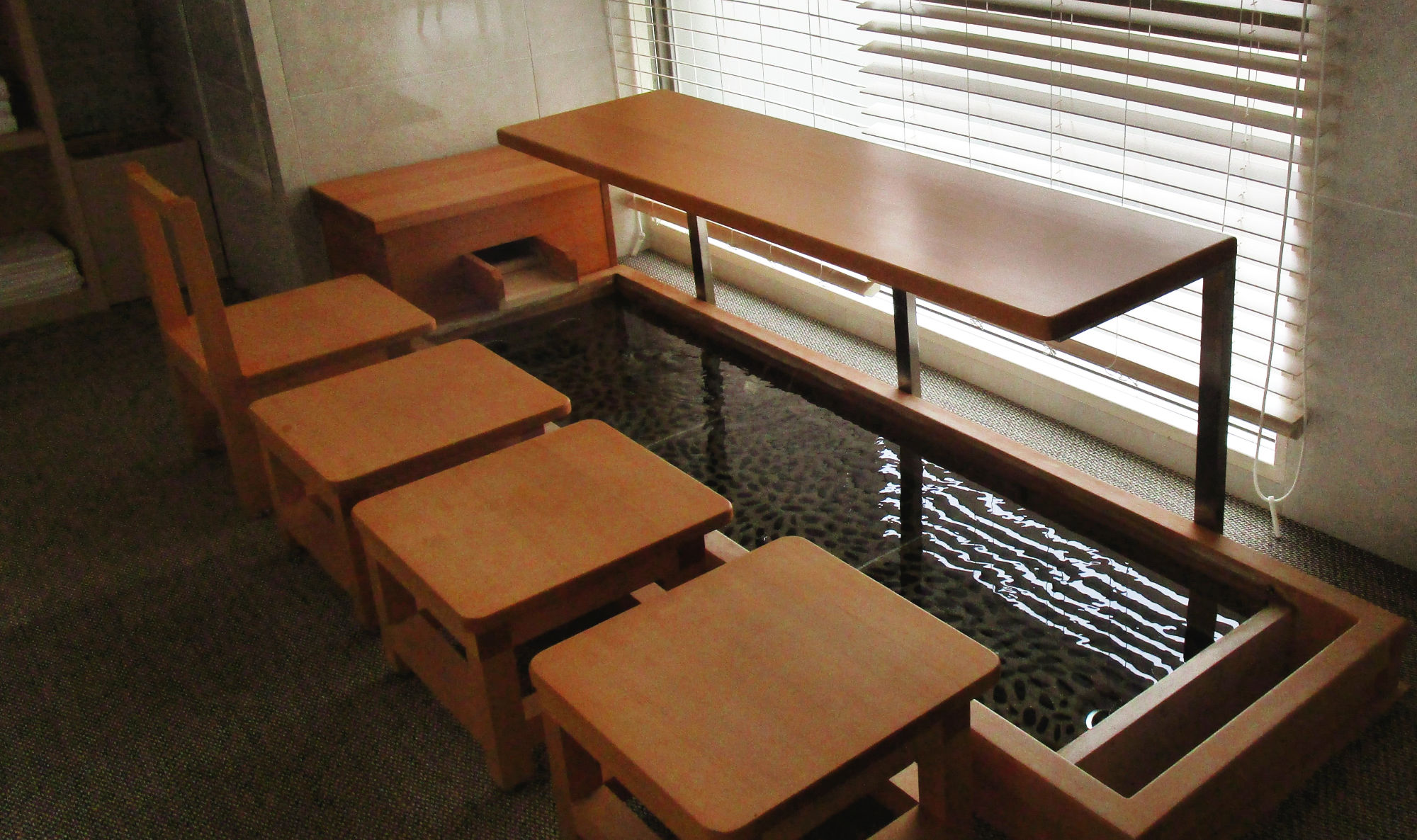
Foot care, in general, is an important feature within Japanese culture. Here is an example of a window with a view at which they’ve positioned a simple foot massage bath, with a table where tea can be enjoyed at the same time. It is easy to see where a similar concept could be rolled out in other parts of the world, perhaps with individual foot spa baths for hygiene protocol. The exterior view is particularly important to this offering, and if using individual foot baths cards could be placed on the seat after use, alerting staff when they to when they needed to be changed, rather than the station needing to be constantly checked. If table ends are also used then this also provides an additional socialising area, as well as an inexpensive Resident pampering station.
For Care Groups there was another exciting Japanese initiative. This Ninja looking person shown here is actually a chef. The outstanding Les Ashyia Care Group in Kobe run a centralised kitchen where all meals are prepared in advance, based on nutritional requirements for all residents across the group, flash frozen on-site and delivered in small vans to all sites along with fresh sauces. The kitchen staff in each location is therefore limited to re-heating stations and plating.


As you will no doubt be aware, the Japanese are also using robots in their care facilities; you can read an excellent article on Reuters, Aging Japan: Robots may have role in future of elder care, or watch the video below should you wish to explore the subject further.