
Empathetic Design for Dementia
The TAD team attended the Care Show in Birmingham in mid-October 2021. It gave us an opportunity to meet new friends and catch up with colleagues and associates we hadn’t seen for a long while. Lori brought her recording equipment with her, and we used our stand as a “live from Birmingham” podcast studio. Episode 11 features some of the conversations she had with the attendees and exhibitors who stopped by to see us.
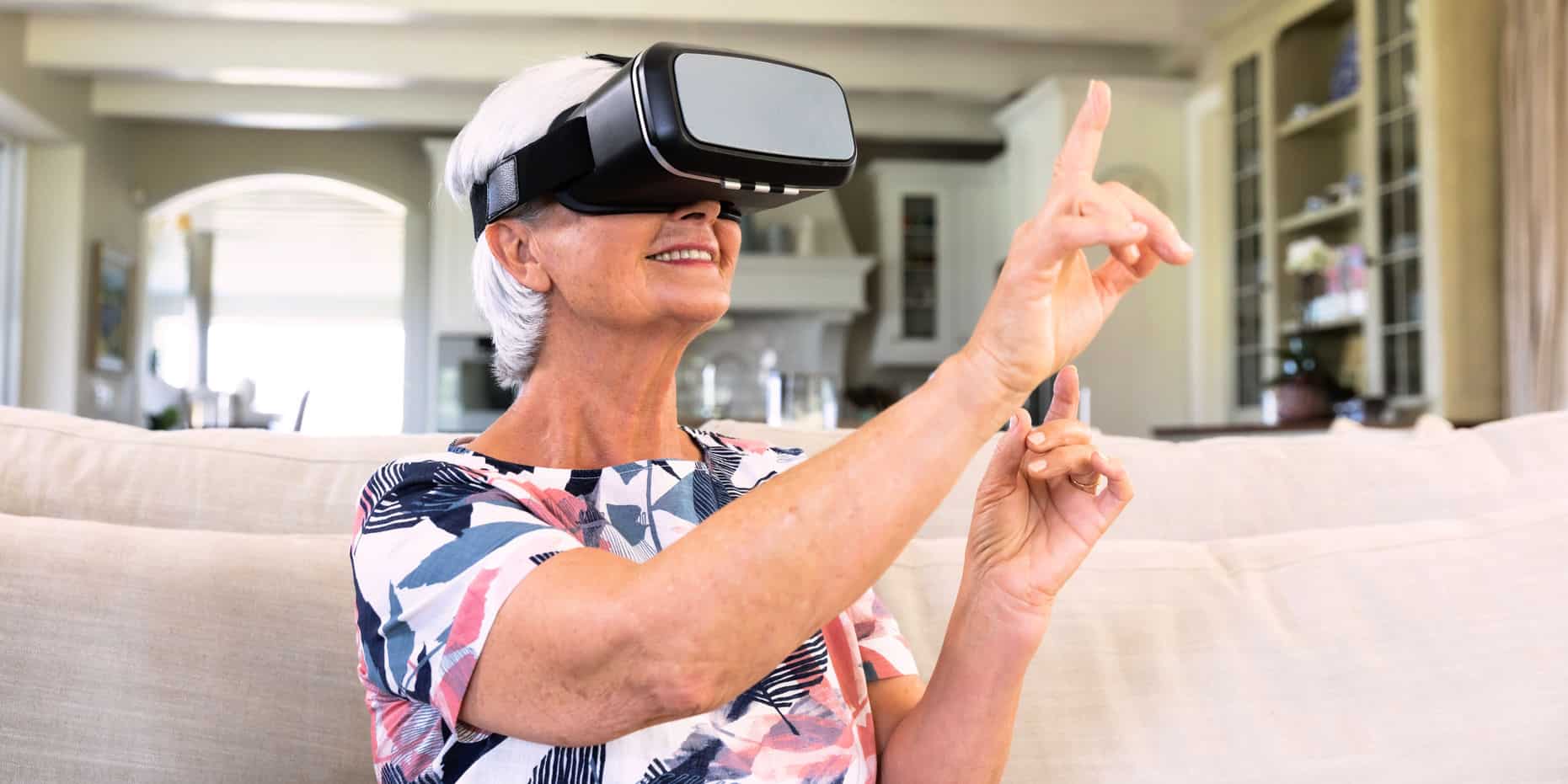
Our stand was positioned opposite one of the lecture theatres, and I had the good fortune to listen to a presentation by David Burgher, founder of the Virtual Reality Empathy Platform (VR-EP). Inspired by the “Be My Eyes” app developed to assist blind and partially-sighted people, David has created an immersive platform that combines evidence-based research with state of the art technology to create a Virtual Reality tool which simulates the way that people living with dementia perceive and navigate their environments. This gives architects and designers an extraordinary insight into the way in which the environments they create are perceived by their end-users.
It’s estimated that 54 million people throughout the world suffer from dementia, for which there is no cure. Significant sight loss affects one in three sufferers, and this is in addition to other forms of sensory and cognitive confusion. People living with dementia often struggle to make sense of the world around them and this can result in high levels of stress.

VR-EP is designed to convey – to researchers, trainers and consultants in dementia design – a genuine understanding of the way in which people with dementia experience their environments. It also provides the opportunity for underrepresented groups, such as those who care for people with dementia, to become active participants in the architectural and design process.
VR-EP offers an invaluable tool to combat what David refers to as “inconsiderate design.” Examples include elements that may be appealing to a healthy adult – sleek glass staircases or vibrant floors – but whose extreme contrasts exacerbate the problems that people with dementia have in moving about their spaces. Patterns such as a dark circles on an otherwise light floor may be perceived as a terrifying holes, for example.
Very low contrasts can be equally confusing; a chair that blends with its background may be almost invisible and therefore be a trip hazard rather than an inviting place to stop and rest.
VR-EP is compatible with most drafting software and so can help architects and designers compensate for impairments associated with dementia. If you’d like to learn more, check out the VR-EP website.