

Care Design in a Post-COVID World
The World Health Organisation declared Covid-19 to be a pandemic on 11 March, 2020 and care home design, along with many other aspects of life BC, (before Covid), has irrevocably changed as a result. We are emerging the other side of lockdown with improvements not previously considered. As an interior designer might say…’every cloud has a visually interesting contrast lining.’
Our care home evolution considers lessons learned from other parts of the sector. Research by the Housing LIN shows 0.97% of retirement village and housing scheme residents in the UK were lost due to confirmed COVID-19 from March to December 2020. This was less than the 1.09% of people with the same profiles who passed from COVID-19 in the general population. In the February 2021 Third Age Design podcast consultant David Driscoll notes that this relates directly to design. Through offers of support for shopping, the delivery of meals in lockdown situations, the statistics speak for themselves, and care homes can offer some similar strategies in the future we’re designing now.
When the world started changing, Park Grove Design was asked almost immediately for design interventions in care settings. Top of the agenda was to facilitate safe visits between residents and visitors, but this quickly evolved into the creation of safe spaces within the overall home. Before the importance of enhanced air circulation was highlighted to us all, safely separating people became the new norm and we worked with the British firm Inside Out Contracts to spread word of their bespoke screening options.
Dining became an issue requiring even greater thought and the legacy of Covid is moving us toward a better future. Large dining facilities had become the norm but always felt more canteen-like than restaurant. This is why so many restaurants have private dining spaces, and ‘nooks’ within their design. There are acoustic benefits for those with impaired hearing in breaking up these spaces and, in addition to giving a sense of ownership to the resident, this provides further options for separating people and is better for people with dementia.
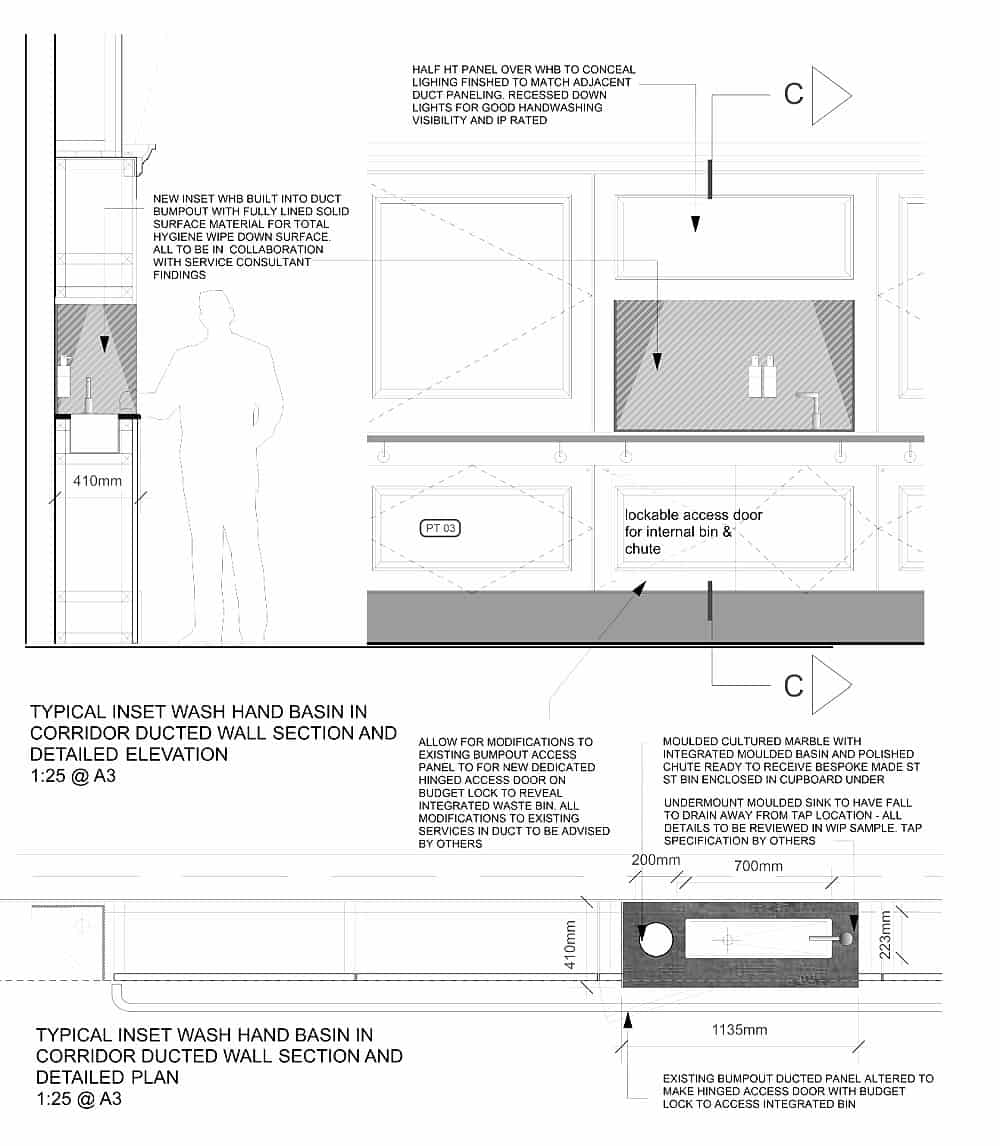
In our current project with The Royal Hospital Chelsea for the Chelsea Pensioners, Park Grove Design is incorporating recessed anti-microbial hand wash facilities into the corridors and developing areas which may be used for isolation.
Reception is the important home gateway, with PPE storage integrated into the desk and UV machines introduced to highlight hand bacteria in addition to thermal camera entry systems checking visitor and staff temperatures before entry.
Storage space has become an even more valuable aspect of new build projects as we now know that there is a distinct advantage to keeping increased levels of consumables such as pads, or PPE.
We’ve also seen an increase in homes converting one room and en-suite into ‘guest’ accommodation from which they might also get a revenue stream, (albeit at a lower return than resident rooms). The upside is having a space available where staff can sleep in critical circumstances, for example, during a pandemic.